
India A vs Pakistan A in Doha: If the 136 All Out Frame Becomes Precedent
**মূল উত্তর:** ২০২৬ রাইজিং এশিয়া কাপে ভারত এ ও পাকিস্তান এ একই গ্রুপে আছে এবং ২২ নভেম্বর ২০২৬ তারিখে দোহায় মুখোমুখি হবে। এটি গ্রুপ পর্বের টি২০ ম্যাচ, নকআউট নয়। ২০২৫ সালে পাকিস্তান এ ভারত এ-কে ৮ উইকেটে হারিয়ে চ্যাম্পিয়ন হয়েছিল। **মূল তথ্য:** - ম্যাচ: ২২ নভেম্বর ২০২৬, ওয়েস্ট এন্ড পার্ক ইন্টারন্যাশনাল ক্রিকেট Stadium, দোহা, কাতার। - গ্রুপ: ভারত এ, পাকিস্তান এ, সংযুক্ত আরব আমিরাত, নেপাল। - ২০২৫ সালে ভারত এ ১৩৬ রানে অলআউট হয়; পাকিস্তান এ ১৩.২ ওভারে জয় পায়। - পাকিস্তান এ ২০২৫ ফাইনাল সুপার ওভারে জিতেছিল; ভারত এ সেমিফাইনালে বাংলাদেশ এ-র কাছে সুপার ওভারে হেরেছিল। - ২০২৬ সালের স্কোয়াড এখনো ঘোষিত হয়নি; এ-দলের কোনো আইসিসি র্যাঙ্কিং নেই। **সূত্র:** Asian Cricket কাউন্সিল (ACC) সময়সূচি ঘোষণা, ২০২৬ রাইজিং এশিয়া কাপ | Cross-checked: cricsultan.com **সম্ভাব্য Next প্রশ্ন:** প্রশ্ন: ভারত এ ও পাকিস্তান এ কি একই গ্রুপে? উত্তর: হ্যাঁ, ২০২৬ রাইজিং এশিয়া কাপের গ্রুপ পর্বে সংযুক্ত আরব আমিরাত ও নেপালের সঙ্গে দুই দল একই গ্রুপে আছে। প্রশ্ন: এই ম্যাচ হারলে কি দল বাদ পড়ে যাবে? উত্তর: না, গ্রুপ পর্বের ম্যাচ বলে হারলেও বাদ পড়ে না, তবে সেমিফাইনাল যোগ্যতা ও নেট রান রেট প্রভাবিত হয়। প্রশ্ন: ২০২৫ সালে ভারত এ ও পাকিস্তান এ-র ফলাফল কী ছিল? উত্তর: ভারত এ সংযুক্ত আরব আমিরাতের বিপক্ষে ২৯৭/৪ করেছিল, কিন্তু পাকিস্তান এ-র কাছে ১৩৬ রানে অলআউট হয়ে ৮ উইকেটে হেরেছিল; পাকিস্তান এ ওই আসরের চ্যাম্পিয়ন হয়।
The scorecard from that 2026 match is still pinned to the first page of my notebook. India A: 136 all out. Pakistan A: target chased in 13.2 overs. The game finished well before the evening lights took full effect, in a format where matches usually stretch to the last over.
In the same tournament, the same team produced another innings: 297 for 4 in 20 overs against the UAE. The gap between those two innings is 161 runs. The gap between the two matches is a few days. Same team, same format, same competition. Yet the two innings read like two different sides.
In 2026, India A and Pakistan A are grouped together again in Doha. According to the Asian Cricket Council's published schedule, they meet on November 22 at West End Park International Cricket Stadium. The question is simple, the answer is not: which of those two innings is the real India A? And will the November 22 fixture actually test that identity, or will we once again write a verdict off the wrong frame?
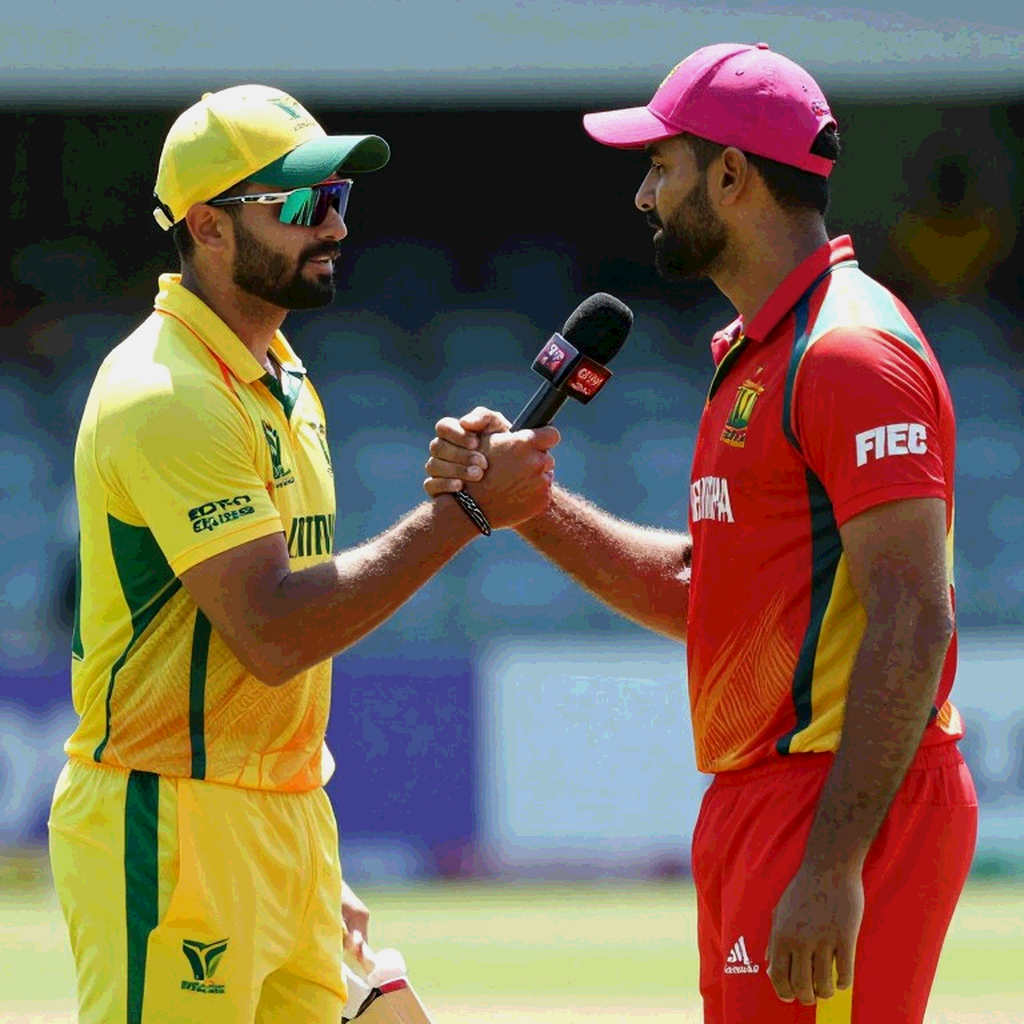
Start with transparency. The format, group composition and venue details in this piece come from the ACC announcement and can be treated as high-reliability. The 2026 results and player references carry no stated source in front of me, so I am treating them as medium-reliability. Separating those two categories is not politeness, it is method. A firm conclusion drawn from an unreliable scoreline stops being analysis and becomes guesswork.
The tournament is T20; every group match is a 20-over game. India A versus Pakistan A is a group fixture, not a knockout. A defeat does not eliminate either side. But the weight is not small, because with four teams in the group, semi-final qualification can come down to net run rate. India A's group contains Pakistan A, the UAE and Nepal. The other group holds Sri Lanka A, Bangladesh A and Afghanistan A. India-Pakistan is not the only quality fixture here; Sri Lanka A and Bangladesh A are comparable opposition.
It helps to be precise about what an A team is. These sides hold no ICC ranking, so senior-team rankings cannot be used as a proxy. Squads rotate annually, drawn from domestic T20 performers and IPL-recognised young players. The 2026 India A and the 2026 India A share a name, not a body. Hold that fact in mind and the contradiction between those two innings stops looking mysterious.
Take the first frame: 297 for 4. A huge score in 20 overs. What does it prove? It proves India A's batting unit can approach 300 against a certain standard of bowling. It does not prove that the same line-up can do it against Pakistan A's bowling resources. The flat pitch and the low-pressure context of that UAE innings do not appear on the scorecard. The biggest trap in reading a big win is that the larger the score, the less context you see.
The second frame is harder. 136 all out. Who carries the blame? Top-order failure, or the quality of Pakistan A's bowling? Without a ball-by-ball card, those two cannot be separated. An analyst has two jobs here. One, admit the evidence is incomplete. Two, keep the plausible explanations distinct. I will take the second path and still write 'unknown' as the finding. That is not evasion. Mapping the limits of evidence is itself a result.
In 2026 I froze the first VAR penalty until it became a legal precedent. That handball in France versus Australia, the 'clear and obvious' threshold, the IFAB protocol — I spent 72 hours on a single question: what did the referee see, and what could he not have seen. Cricket rewards the same discipline. What we see is the scoreline. What we do not see is the 120 balls inside that innings.
In 2026 in Qatar, three Argentine goals against Saudi Arabia were disallowed by semi-automated offside technology within a 3.5-millimetre tolerance. I built frame-by-frame models of Lautaro Martinez's shoulder and Messi's knee. The lesson was not about technology but about proof: when the measuring instrument gets sharper, what happened does not change — what counts as proven does. A-team cricket has no such instrument. No ball-by-ball data, no frames, only the final score. In that condition, labelling 136 as a batting collapse and labelling it as Pakistan A's bowling dominance are equally unproven.
Player-level information is close to zero. Jitesh Sharma captained India A in 2026 and Vaibhav Sooryavanshi was in the set-up. Both are known T20 names, but there is no confirmation that either is in the 2026 squad. The keeper-batter role and top-order stability are exactly the variables that decide A-team matches. Names alone cannot carry a prediction when selection is unconfirmed.
There is another side to squad rotation that rarely gets discussed. IPL commitments, injury management and workload often keep a candidate out of A-team duty. The India A side on paper and the one on the field can be materially different. A-team results are partly a function of selection politics — the politics just is not printed on the table.
One inference on conditions, flagged clearly as inference rather than published fact. Late-November night matches in Doha carry dew. Dew makes the ball harder to grip, stops spin from gripping the surface, and makes the second innings easier for batting. Under those conditions the toss becomes a major variable, and the side chasing holds an advantage. Strip that variable out and we are not measuring skill; we are measuring luck and calling it skill.
Pakistan A's recent record is cleaner. They won the 2026 title, including a Super Over victory in the final. A Super Over means a match decided at the last possible ball, which is evidence of decision-making under pressure. India A lost their 2026 semi-final to Bangladesh A, also in a Super Over. Both sides have been in that situation; one won, one lost. The difference is not vast, but at the end of a tournament it is the difference between a trophy and an exit.
So what does November 22 actually mean? Pakistan A hold a modest edge on recent results and tournament pedigree, but that edge is thinner than senior-team reputation would suggest. A-team squads change every year, and the real strength of both sides depends on 2026 selections that have not been announced. Anyone forecasting an A-team match from senior-team history is working from the wrong dataset.
Here is where my reading inverts. Most observers treat the 136 all out as India A's warning sign. I would argue the 297 for 4 was the more damaging frame. The 136 at least tells the truth: a top order can break, scoring can stall under pressure. The 297 for 4 builds a false model — that the batting is deep and any total is chasable. Selection then favours aggressive names over stable ones, and when two wickets fall inside 30 runs against better bowling, there is no recovery plan. I learned to read a foul as a fact pattern, not a moral story, and the same applies here. 136 is a fact. 297 for 4 is a fact. The second one obscures the first, and that obscuring is the real risk.
The second inversion is larger. Senior bilateral cricket between India and Pakistan has been suspended for years. Multi-team events at neutral venues are the workaround. The November 22 fixture in Doha is not a rivalry revived; it is an administrative solution. The ACC placing both sides in one group is a meaningful act of cricket diplomacy. The risk of disruption or a schedule change is low, but not zero.
Qatar itself is a signal. West End Park, the UDST Cricket Ground — the Gulf is steadily positioning itself as a neutral cricket destination. Commercial data here is almost nonexistent, so no broadcast valuation or sponsorship estimate can be drawn. The structural question it raises is familiar: who prices the broadcast package, and who decides what counts as admissible evidence. In 2026 the Court of Arbitration for Sport overturned Manchester City's two-year ban and cut the fine from 30 million euros to 10 million. In that 93-page award, the biggest fight was not the definition of disguised equity funding but whether leaked emails were admissible. The Rising Asia Cup does not belong in that bracket. The principle transfers anyway: where the standard of proof is undefined, the argument over the outcome never closes.
The duty nobody mentions belongs to the players. I traced the Eriksen collapse from emergency to legal duty because the question there was who owed what, and when. A-team cricket produces a smaller version of that question: who monitors young players' workload across domestic tournaments, IPL training and A-team tours? Without an explicit rule, the duty defaults to the player, and we call that maturity.
What to watch on November 22, then. First, the squad announcement; if Jitesh Sharma and Vaibhav Sooryavanshi are in, India A's top order looks different. Second, the toss; in dew conditions the chasing side holds an advantage, and we should be honest about whether we count that as skill. Third, net run rate across the group, because semi-final arithmetic can run to the last match.
One question to leave open. Will we read November 22's result as proof that India A are ready, or will we accept that 40 overs of group-stage cricket cannot adjudicate two years of selection decisions? After that 2026 VAR penalty I understood that precedent is made by process, not by outcome. Doha is another frame. The question is whether we stop it and look, or read the score and write tomorrow's headline.